October 11, 2026
Navadurga, Navaratri, and Dashain: Understanding the Nine Forms of Durga Across Nepal and India
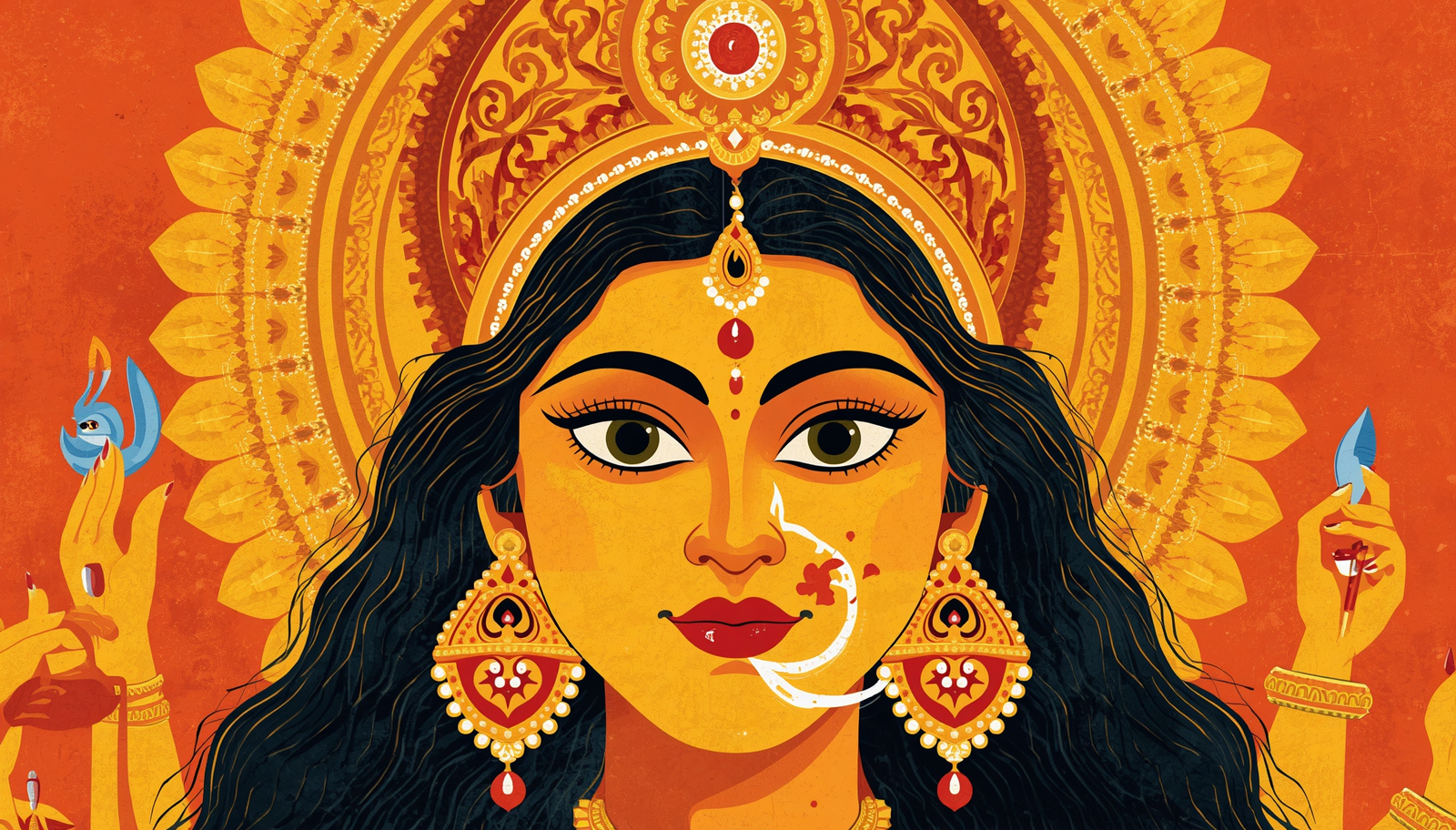
Across South Asia, autumn signals a period of profound spiritual, familial, and community renewal. In India, this season is widely observed as Sharad Navaratri, culminating in Vijayadashami; in Nepal, it forms the cornerstone of the national calendar as Bada Dashain (or Vijaya Dashami). At the theological core of both celebrations is the veneration of Goddess Durga and her nine distinct manifestations, known collectively as the Navadurga (नवदुर्गा). While the devotional foundation remains shared, the expressions reflect rich regional diversity, blending ancient Sanskrit iconography with indigenous customs, community gatherings, and public health rhythms.
The Navadurga: Nine Manifestations and Their Iconography
The Markandeya Purana and the Devi Mahatmya outline the sequential worship of nine specific aspects of feminine cosmic power (Shakti) across the nine nights of Navaratri and the foundational days of Dashain. Below is an overview of each form in English and Nepali (नेपाली), along with its traditional symbolism:
1. Shailaputri (शैलपुत्री)
Devanagari: शैलपुत्री | Day: Pratipada (Day 1)
Known as the daughter of the Himalayas (Himavat), Shailaputri represents the primordial, grounded energy of nature and stability. She is traditionally depicted mounted on a bull (Nandi), holding a trident (trishul) in her right hand and a lotus blossom in her left. In ritual practice, her day coincides with Ghatasthapana, the formal sowing of seeds and invocation of divine presence.
2. Brahmacharini (ब्रह्मचारिणी)
Devanagari: ब्रह्मचारिणी | Day: Dwitiya (Day 2)
Brahmacharini personifies dedicated spiritual austerity, ascetic discipline, and inner cultivation. Walking barefoot, she carries a rosary (japa mala) and a water pot (kamandalu). Her form emphasizes introspection, mental resilience, and the patience required to attain ethical and spiritual wisdom.
3. Chandraghanta (चन्द्रघण्टा)
Devanagari: चन्द्रघण्टा | Day: Tritiya (Day 3)
Adorned with a crescent moon shaped like a bell on her forehead, Chandraghanta represents readiness against injustice and inner conflict. Depicted with ten arms holding various protective implements and mounted on a tiger or lion, she symbolizes grace paired with unwavering valor.
4. Kushmanda (कूष्माण्डा)
Devanagari: कूष्माण्डा | Day: Chaturthi (Day 4)
Etymologically associated with the primordial cosmic egg and the warmth that sparked universal creation, Kushmanda represents vitality and light. She is traditionally venerated with offerings of ash gourd (petha or kubhindo in Nepali) and is depicted radiating brilliant solar energy.
5. Skandamata (स्कन्दमाता)
Devanagari: स्कन्दमाता | Day: Panchami (Day 5)
Skandamata depicts the mother of Skanda (Kartikeya, the commander of divine forces). Seated upon a lion and often cradling the infant deity, this form symbolizes protective maternal power, nurturing leadership, and familial guardianship.
6. Katyayani (कात्यायनी)
Devanagari: कात्यायनी | Day: Shashti (Day 6)
Born to the sage Katyayana to combat destructive forces, Katyayani represents righteous action, fierce determination, and decisive courage. She is depicted brandishing a shining sword, symbolizing clarity of purpose and the destruction of negative habits.
7. Kalaratri (कालरात्री)
Devanagari: कालरात्री | Day: Saptami (Day 7)
Representing the fiercest aspect of the divine, Kalaratri is depicted with dark complexion, disheveled hair, and a fearless stance riding a donkey. She represents the dissolution of darkness, ignorance, and fear. In Nepal, her day coincides with Phulpati, a major national ritual marking the entry of sacred foliage into domestic and official spaces.
8. Mahagauri (महागौरी)
Devanagari: महागौरी | Day: Ashtami (Day 8)
Symbolizing purification, tranquility, and luminous calm after severe penance, Mahagauri is depicted dressed in pristine white, riding a white bull. In both Indian and Nepali traditions, Maha Ashtami involves deep household worship, community rituals, and offerings honoring peace and regeneration.
9. Siddhidatri (सिद्धिदात्री)
Devanagari: सिद्धिदात्री | Day: Navami (Day 9)
Seated on a lotus, Siddhidatri is the bestower of all spiritual and worldly accomplishments (siddhis). She represents fulfillment, balance, and complete realization, concluding the Navaratri cycle of dynamic transformation.
Comparative Perspectives: Navaratri in India vs. Dashain in Nepal
While the theological framework of the Navadurga is shared across borders, cultural observances diverge in meaningful ways:
- Dashain in Nepal: Known locally as Bada Dashain, the festival extends past Navami into a multi-day family homecoming. On Vijaya Dashami (Day 10) and continuing through Kojagrat Purnima, elders bestow Rato Tika (a mixture of rice, yogurt, and vermilion) and Jamara (barley or maize shoots sprouted during Ghatasthapana) on younger family members as blessings of prosperity and long life.
- Navaratri in India: Observances vary widely across states. In West Bengal, grand community Durga Puja pandals celebrate the goddess's visit. In Gujarat and Maharashtra, communities engage in vibrant Garba and Dandiya Raas folk dances. In Northern states, the festival frequently incorporates Ramlila enactments culminating in the burning of Ravana effigies on Dussehra.
Key Takeaways for Community and Wellbeing
Beyond theology, festivals serve vital functions in social cohesion, mental health, and communal solidarity:
- Intergenerational Bonding: Both Dashain and Navaratri facilitate family reunions, reinforcing emotional safety nets and respect for elder wisdom.
- Seasonal Transitions: Ritual practices emphasize seasonal awareness, dietary mindfulness, and transitions into cooler autumn weather.
- Public Health Responsibility: Large-scale travel, gatherings, and festive feasting necessitate attention to food safety, safe transit on mountain highways in Nepal, and moderation in heavy meals and alcohol consumption.
Understanding the common roots and distinct traditions of Navaratri and Dashain honors the rich cultural fabric of both Nepal and India, providing a meaningful bridge between sacred symbolism and modern community life.